

Ceramics challenges for the new year
Corrie Bain International Ceramics School has always been a place for ceramicists to experiment and follow their curiosity while developing their skills. As a new year begins, many makers feel a familiar urge: to stretch themselves creatively and discover new ways of working with clay.
Whether you’re currently enrolled in a ceramics course or working independently in your own studio, the start of the year is a powerful moment to reset your creative direction. Below are five challenges designed to push your skills, expand your technical knowledge, and reconnect you with the excitement that drew you to ceramics in the first place.
Challenge 1: switch your method of making
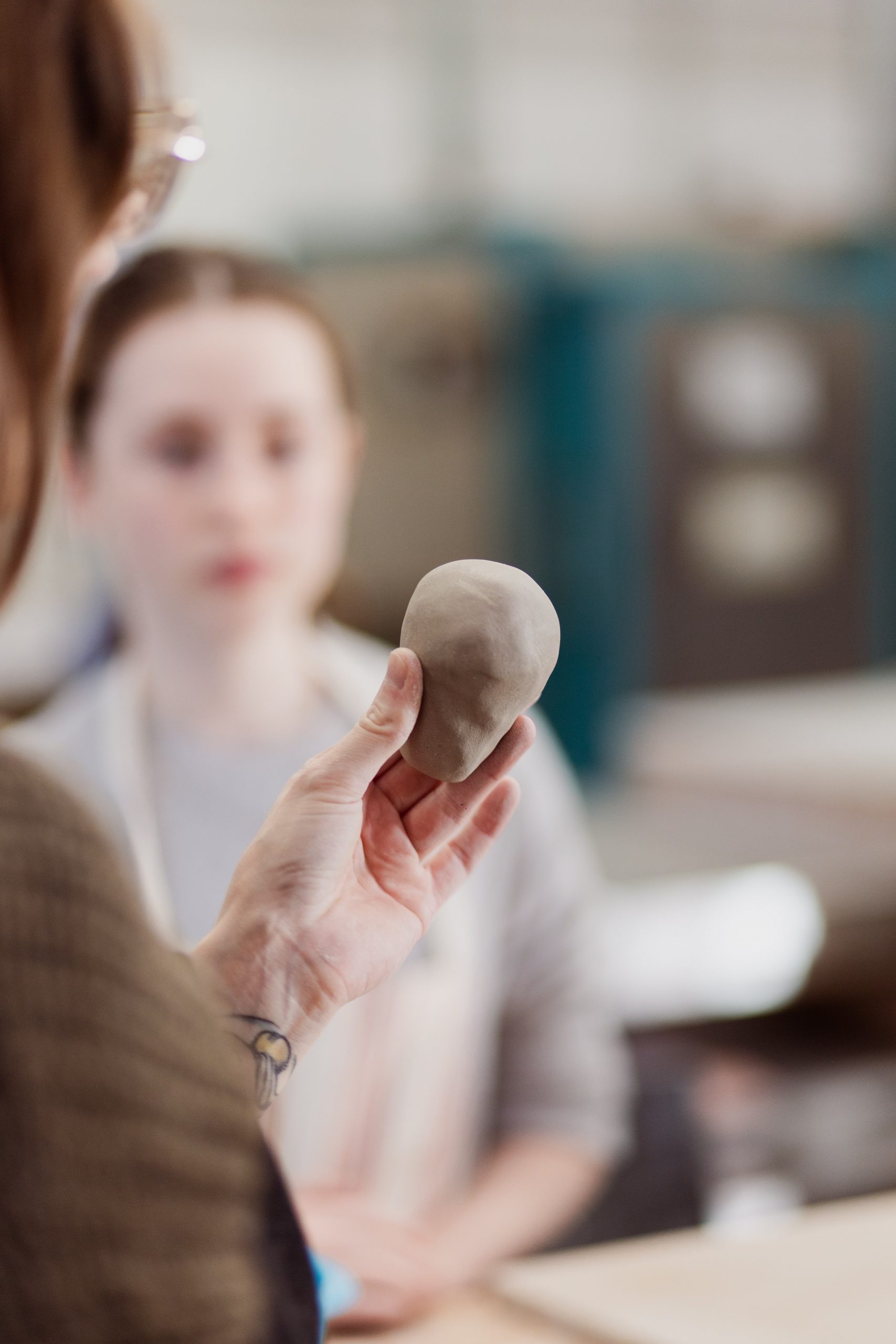
Most ceramicists naturally gravitate towards one main method. Perhaps you feel most confident at the wheel. Or maybe handbuilding – pinching, coiling, or slab construction – feels more intuitive and sculptural to you.
This year’s challenge? Do the opposite.
Switching techniques can feel uncomfortable at first, but that discomfort is where learning happens. Wheelthrowers often discover that handbuilding improves their understanding of the material and how it behaves at different stages of drying, while handbuilders who try the wheel gain a deeper understanding of symmetry, wall thickness and speed.
At Corrie Bain International Ceramics School, students are encouraged to explore both approaches. Even a short period of cross-training can unlock new ideas and help you approach your preferred method with fresh insight, or combine approaches to create new forms. If you’ve ever felt stuck in a rut and repeating the same forms, this simple shift can be transformational.
Challenge 2: try a difficult new technique
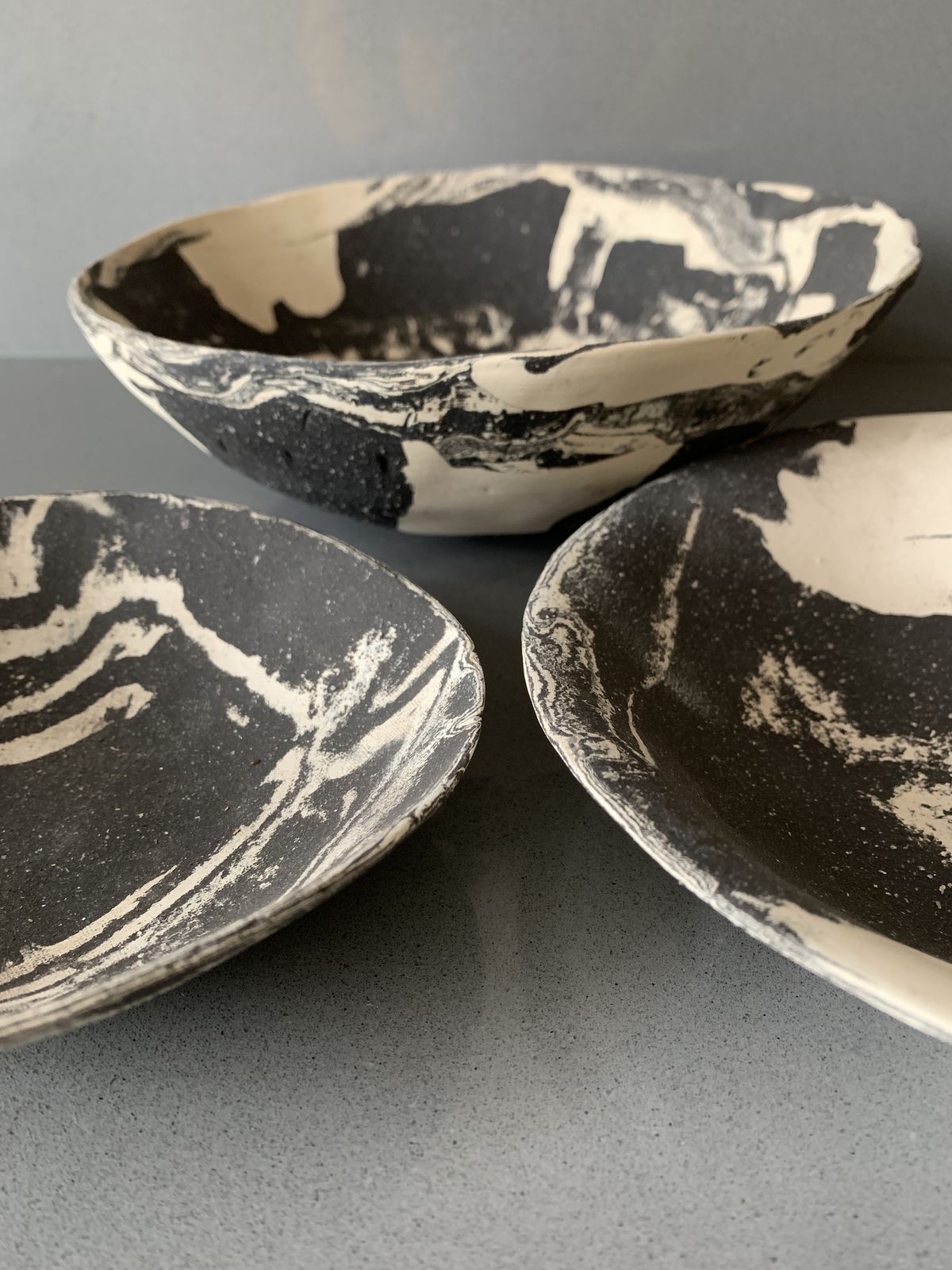
Some techniques feel like a puzzle you’ve been putting off for years. Nerikomi and neriage – traditional Japanese methods using coloured clays to create intricate patterns – often fall into that category.
Both techniques demand precision and forward planning. Nerikomi is a handbuilding method which involves many steps: staining your clay different colours, creating and compressing patterned clay blocks, then using thin slices of the block to create a form. Neriage also starts with staining clay, but the process of combining them is a little looser. You end up with a marbled clay which you can use for wheelthrowing, seeing how the movement naturally elongates the designs. Neither technique is quick, and both come with a learning curve – but the results can be extraordinary.
Challenging yourself to learn one of these methods can dramatically improve your clay preparation skills and deepen your understanding of colour, composition, and material behaviour. More importantly, they encourage you to slow down and be intentional at every stage of making.
Challenge 3: incorporate other materials

Ceramics don’t have to stop at decorative pieces or tableware. One of the most exciting ways to grow as a maker is by integrating clay with other materials and functions.
Lighting is a perfect example. Creating a ceramic lamp introduces new technical considerations: balance, heat resistance, wiring, fittings, and the relationship between light and surface. These challenges push you to think like a designer.
This year, consider expanding your practice by enrolling in our weekend lamp-making course, Designing With Light. Over two focused days, you’ll design and make a ceramic lamp from scratch, considering both form and function. The course begins with a clear introduction to lighting basics and electrical components, including hands-on testing with cables, bulbs, and fittings. You’ll then develop your design and start building in clay. On Sunday, you’ll continue construction and add slip decoration if appropriate. While electrical assembly isn’t completed during the course, you’ll leave with the knowledge to finish your lamp confidently afterwards.
For many students, this kind of cross-disciplinary project becomes a turning point in creative development, giving you the chance to see your work in a new context: functional and architectural.
Challenge 4: explore glaze chemistry
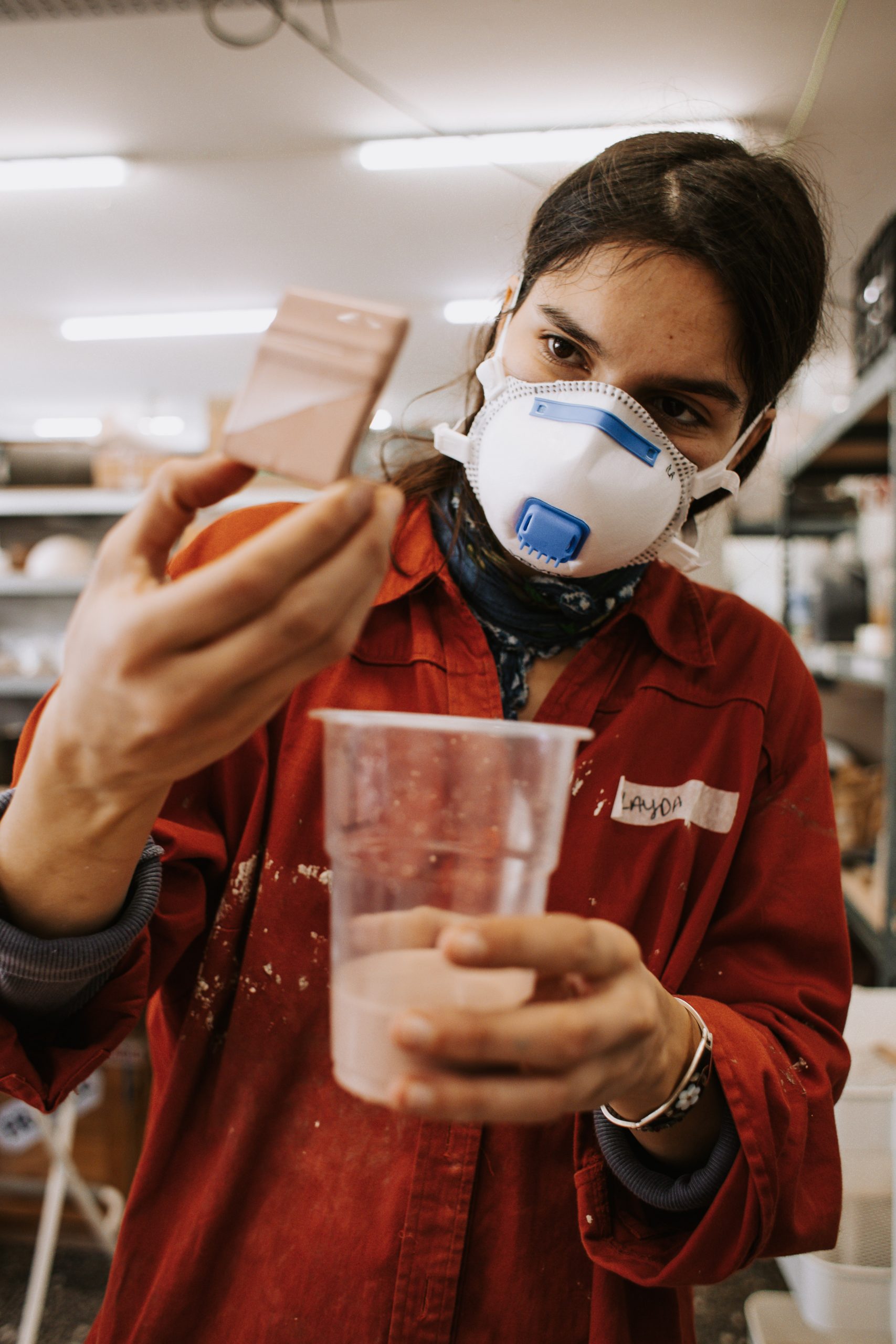
Glazes can feel mysterious and even intimidating. It’s easy to rely on familiar commercial glazes or trusted recipes, especially when consistency matters. But one of the most powerful learning challenges you can set yourself this year is to understand what’s really happening inside your glazes.
Exploring glaze chemistry doesn’t mean becoming a scientist overnight. Start small: test line blends, adjust one ingredient at a time, and keep detailed notes. Learn how fluxes, silica, and alumina interact. Notice how firing temperature and atmosphere affect results.
In our three month ceramic intensive course, glaze theory is a core component, because understanding chemistry gives you creative freedom. Instead of hoping for a good outcome, you begin to design glazes with intention. Over time, this knowledge leads to surfaces that are uniquely yours.
Challenge 5: show your work

Making the work is only part of the journey. Sharing it through exhibitions, open calls, artistic residencies, symposiums or competitions can be just as daunting as mastering a new technical skill.
So, make it a structured challenge rather than an overwhelming goal. Start by researching opportunities: galleries, craft councils, open studios, and online platforms that regularly publish calls for submissions or residencies. Many students discover these opportunities through their pottery course networks, tutors, and visiting artists.
Take time to document your work properly. You’ll need good photographs and clear descriptions of your pieces, and a concise artist statement. Even if your first submissions aren’t successful, the process of submitting itself builds confidence and clarity about your ceramics practice.
It’s worth noting that exhibitions and residencies are a wonderful opportunity for dialogue and inspiration as well as recognition. Seeing your work in a shared space, alongside other makers, often sparks new ideas and directions.
A year of growth and experimentation
The new year doesn’t need grand resolutions. Instead, the next twelve months of making can be shaped by curiosity and experimentation. Each of these challenges – switching techniques, learning demanding processes, expanding into new forms, building your understanding of glazes, and sharing your work – offers a way to grow as a ceramicist.
At Corrie Bain International Ceramics School, every ceramics course is designed to support this kind of development: practical, thoughtful, and rooted in creative growth. Whether you’re just beginning your journey or refining an established practice, this can be the year you embrace new challenges and discover just how far your curiosity can take you.
Learn more about the courses available at Corrie Bain International Ceramics School.