

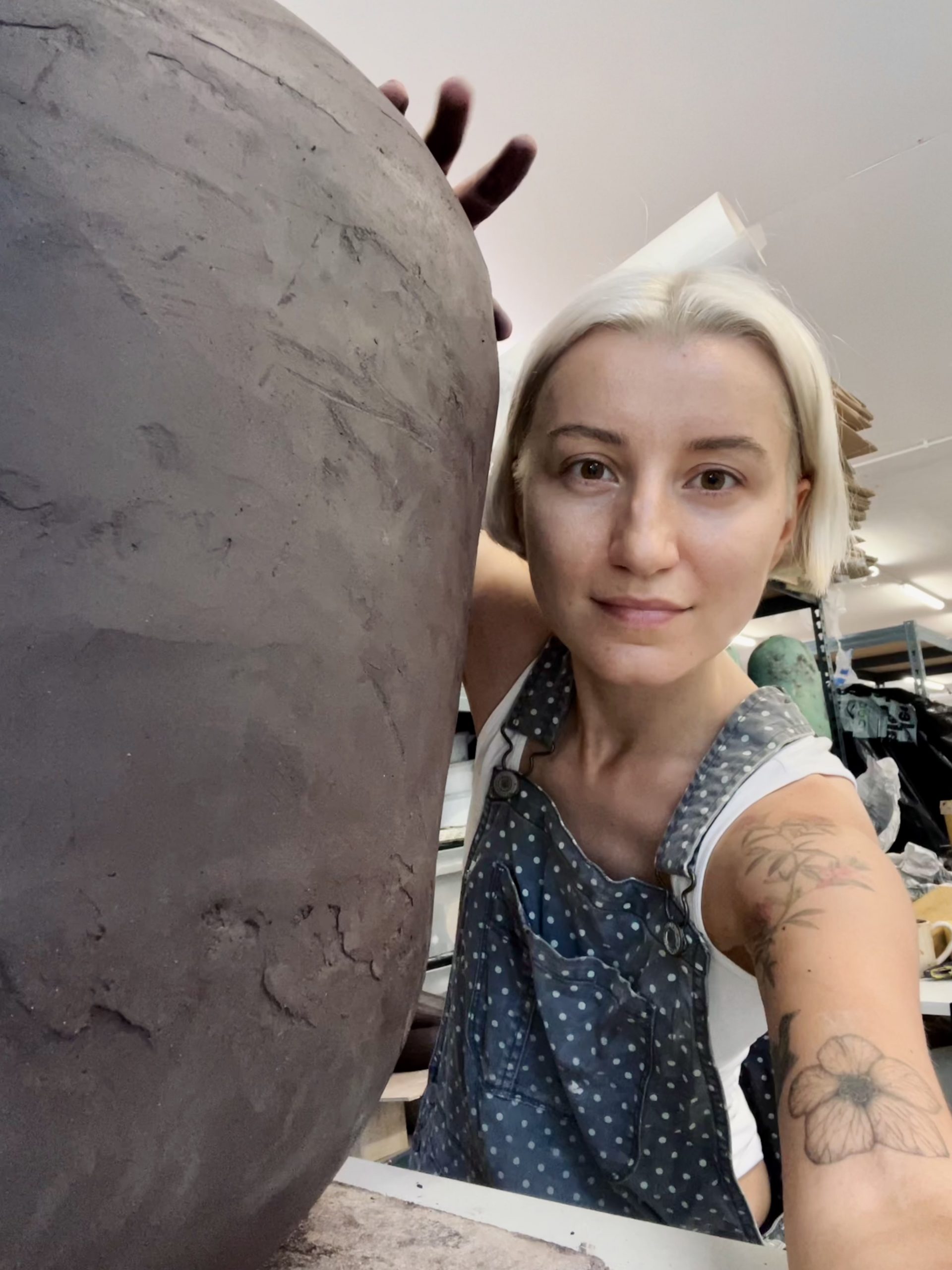
“Go as big as the kiln allows”: Inside the Intensive Weekend Big Object Handbuilding Course
We sat down with Maryia Virshych, tutor at Corrie Bain International Ceramics School in Barcelona, to talk about the school’s intensive weekend handbuilding course, and why building big might be the fastest route to a deeper understanding of clay.
The course has a pretty bold premise – spending a whole weekend building at a really large scale. Where did the idea come from?
It started with the studio itself. We have equipment that very few places can offer: an extruder, a slab rolling machine, huge kilns. That’s genuinely rare, and it felt like something we should be making the most of. And then I started noticing what was happening in my regular handbuilding classes: students kept going bigger and bigger, pushing their ambitions each week. We were having so much fun with it. Eventually one student decided he was going to go as big as the kiln would physically allow. We literally measured the kiln and said, Okay, those measurements are your limits. But before that? Just go for it.
That energy is contagious. And that’s when I thought: we should make this more intentional, more accessible, and give people a dedicated space to really commit to working at scale.
For potters who mostly work small, what challenges might they find when building large forms?
The main thing is that you’re working against gravity. But this is also where clay reveals something magical. As it dries, it hardens, which means you can keep building in stages. The real challenge, and where pieces fail, is in managing the dryness of the clay. If it’s too wet, the whole structure collapses under its own weight. Too dry and you can’t bond new sections properly.
This is something that is hard to learn in a theoretical way – it needs to be demonstrated through touch. And that’s really what this course is about: developing that instinct. You start to feel when the clay is at the right stage. You learn what you can and can’t do at each stage of building. Constructing a piece at a larger scale forces you to really pay attention to the way that the clay is drying, propelling your understanding of the material much further and much faster, than working small.
Students will leave the course with a deeper knowledge of clay and its possibilities.
The course focuses specifically on slab construction and extrusion coils. Why these techniques for scaling up?
Speed, mainly. When you’re building something large, you don’t want to spend half the day rolling coils by hand. It slows everything down, and honestly? It’s a little boring! The extruder completely eliminates that step. You just build, build, build. It opens up a whole new world of possibility.
We also start each piece using a slab over a mould, so you’re not beginning from nothing – you build up from there. We made these choices in order to remove the repetitive, time-consuming parts of the process. It means that students’ attention can go where it really matters: the dryness of the clay and the design of your piece.
This is also why the course isn’t for complete beginners. We skip the basics. If you’ve never touched clay before, this isn’t your starting point. But if you have some experience and you’re ready to be challenged, this is exactly designed for you.
The course description mentions groggy clay – why that specific choice?
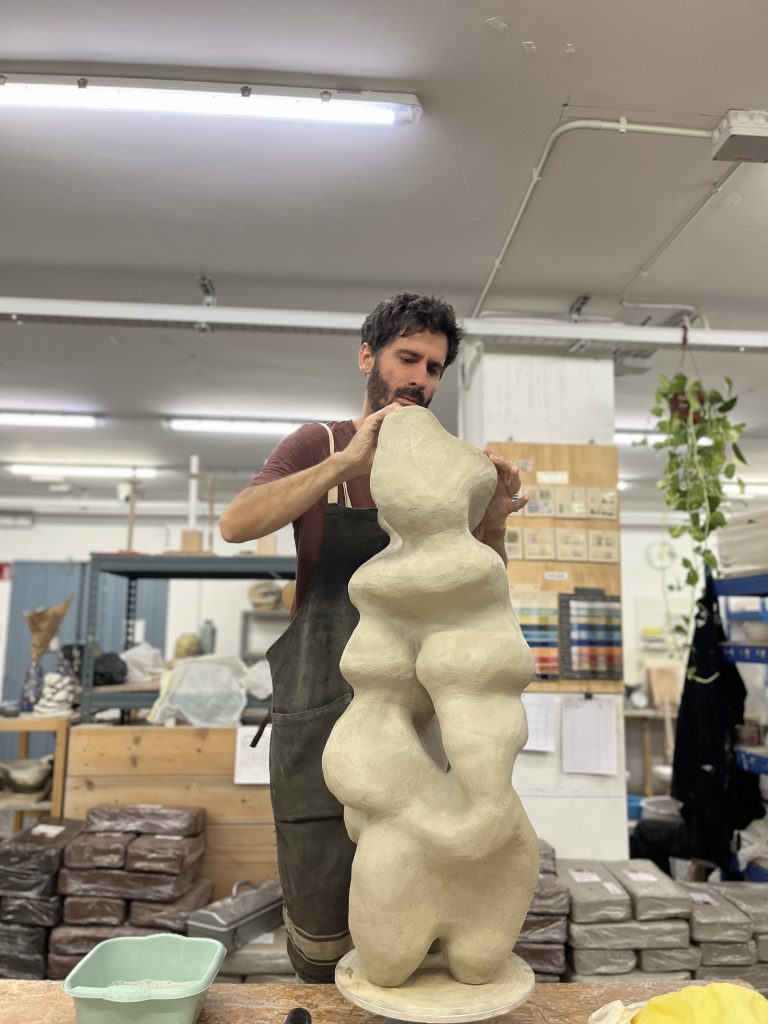
Two reasons. Structurally, grogged clay is much more robust to build with. Grog is clay that’s already been bisque-fired and ground back down into small particles, then mixed back into the clay body. Think of it like the difference between cement and concrete. The grog gives the clay an internal structure that makes it easier to build tall and scale up.
The second reason is the finish. We’re going to single-fire these pieces, we’re not glazing them. And grogged clay looks genuinely beautiful unglazed. It has this rustic, earthy quality that looks intentional and complete, not unfinished. We have a few different colours to work with, and honestly I like all of them, so we might just vote on the day.
Your teaching philosophy emphasises individuality. How does that fit into a structured weekend format?
There’s less open-ended time than in a longer continuous course – that’s just the reality of two days. But we do build individual intention into the process from the very start. The first thing we do is draw. Students sketch out their piece within a general framework – large, vertical, roughly within certain proportions – and that becomes their plan. The whole day, you’re working towards your own idea.
I always ask students to draw before they build, because it’s very easy to just go with the flow when you’re working with clay. And there’s a place for that. But I think you learn more when you’re trying to realise something specific, when you have an intention and you’re following through on it.
The extruder and the slab setup take the repetitive work off your plate. That frees you up to focus on two things: reading the dryness of the clay, and building towards your design. And building large actually gives you a bit of grace. If you deviate slightly from your plan, it’s less obvious than it would be on a small piece. You have more room to find your way back.
What kind of things might people end up making?
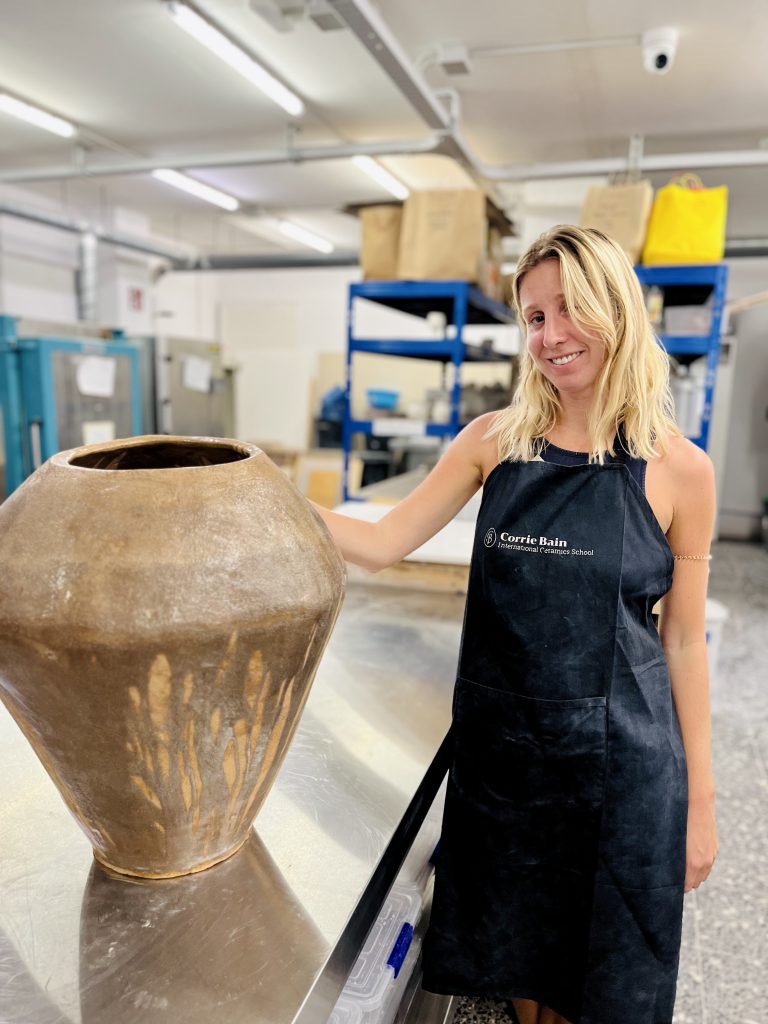
I love Mediterranean forms. Big classical vases in raw clay look extraordinary at scale. Simple shapes, but the size and the material do all the work. I also think we’re likely to see at least one piece that’s somewhere between a vessel and a side table. That territory between furniture and ceramics is really interesting. Let’s be honest — who actually needs a vessel that large? But it looks incredible. It has presence. And with grogged clay at that scale, it has this beautiful weight to it.
The group is capped at four people. Is that just a practical limitation?
Practical, yes: everyone needs access to the extruder, the slab roller, and enough floor space. But it’s also very much a choice. At this scale, the pieces need constant attention. I need to be moving between students throughout the day, checking how each piece feels, catching problems before they become collapses. I can explain the theory all I like, but ultimately I need to touch the clay and say: yes, you can build now, or no, this needs to be drier.
With four people, I can give that level of attention. It’s almost one-on-one. And that matters, because we really want everyone to succeed. These are large pieces. A failure means wasted material, wasted kiln space, and a lot of effort down the drain, so a high level of tutor attention means that doesn’t happen.
Who is this course for? Who’s your ideal student?
Someone who’s already doing some handbuilding, maybe at home or in a smaller studio, and who’s been curious about working bigger, but hasn’t had the space or equipment to try it. Because to be frank, very few studios have what we have here. If the biggest thing you’ve managed to build so far is a 30 centimetre vase, this course will change your sense of what’s possible.
And importantly, what you learn here doesn’t stay at this scale. The principles – how to read the dryness, how to build in stages, how to follow your design – all of that translates directly back into your everyday practice.
Finally, what mindset do you want students to arrive with?
Come with an idea. Have something in mind that you’d like to make. But hold it loosely. Clay is a natural material, and you’re working at a scale that might be completely new to you. Things change. Your piece might want to go in a different direction. That’s not failure: that’s ceramics.
Be ambitious. But be flexible. If you’re too attached to a fixed outcome, the clay will punish you for it. Come ready to be challenged, ready to be surprised, and ready to leave with something you didn’t know you were capable of making.
The Intensive Weekend Big Object Handbuilding Course runs over one weekend and is limited to four participants. Book your place here.